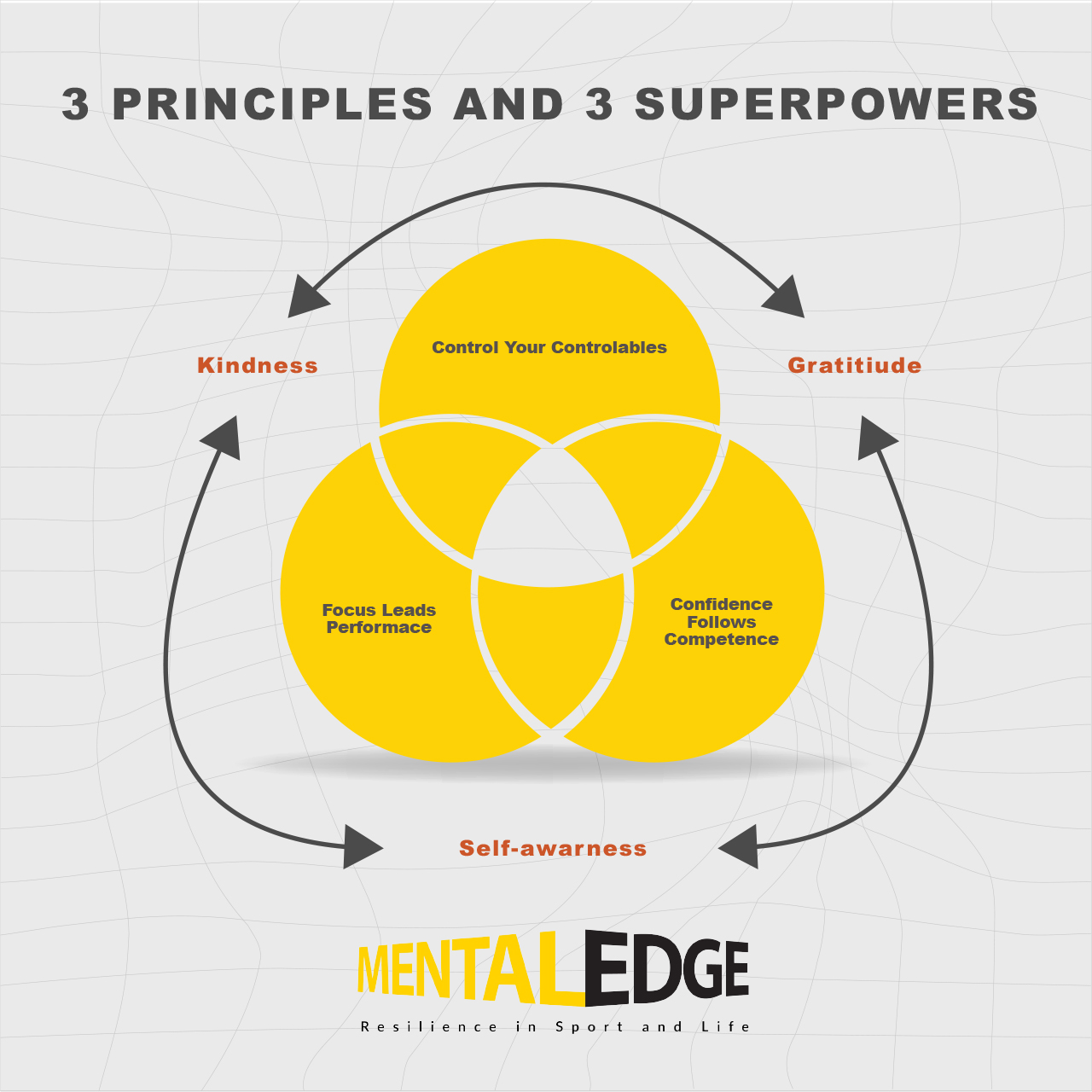
Principles First Approach to Mental Resilience (Part 1 of 3)

Traditionally, learners are introduced to psychological skills by learning the basics of goal setting, visualization, and self-talk (Weinberg & Gould, 2019). My preferred approach starts with the understanding of basic psychological principles, helping learners recognize their innate tendency for self-regulation, imagining future outcomes, and setting goals. By reflecting on past experiences where these tendencies helped them overcome challenges, learners gain insight into their existing strengths.

Consequently, the purpose of psychological skills training is to help them intentionally leverage these strengths to enhance performance and resilience. This approach requires a paradigm shift from viewing the learners as passive recipients of knowledge, waiting to be taught specific skills, to the assumption they already possess the innate resources needed to succeed (Rogers, 1995).
Continue reading “Principles First Approach to Mental Resilience (Part 1 of 3)”

“See it, believe it.”

Imagery, sometimes called visualization or mental rehearsal, is widely used by athletes, business professionals, musicians, and almost anyone looking to enhance their performance. It involves creating mental images of your performance to help you perform better under pressure, improve skills, evoke emotions, or create an immersive mental experience (Ramsey et al., 2010). I should also emphasize that Imagery is a mental skill; like all skills, it requires practice.

How does Imagery foster confidence and enhance performance?

Continue reading ““See it, believe it.””

The Myth of the “Zone”

The “Zone,” also known as the flow state, has been described by performers as effortless, where everything clicks perfectly, and they achieve a heightened sense of performance (Jackson et al., 2001). While this state undoubtedly leads to enhanced confidence and focus even under competitive pressure, it is essential to understand that the “Zone” can be elusive and cannot be directly summoned at will.

When the zone calls, you must listen. You never know how long being in the zone lasts.

John Passaro

Since the flow state may happen spontaneously or fleetingly, but it cannot be consistently manufactured, does that also mean that we have to leave our confidence and focus to chance?

Continue reading “The Myth of the “Zone””