Cocky on the Inside, Humble on the Outside

I recently shared an article about a controversial and outspoken local athlete on my Facebook. The responding comments were somewhat polarizing – some felt that he should be more respectful towards authority and his rivals, yet many felt that his arrogance was justified.

Even though I really wanted to join in the discussion, I hesitated because the thread seemed to be spinning out of control. Hence this post to share my thoughts about the underlying tension between arrogance and humility and also some suggestions on how to develop confidence without being outwardly arrogant.

Confident or Cocky?

One of my friends on Facebook commented…

“A truly competitive athlete usually display arrogance. In order to be the best, you have to believe you are the best…”

It’s a valid comment and confident athletes often envision themselves as a great athlete. These athletes will not hesitate to make use of positive self-labels to play up their own skills, and may at times play down or undermine their opponent’s abilities.

Champions-arent-made-in-gyms.-Champions-are-made-from-something-they-have-deep-inside-them-a-desire-a-dream-a-vision.-They-have-to

However, in a country like Singapore which has been described by Michele Gelfand -author of ‘Rule Makers and Rule Breakers’, as having a tight culture*, athletes who are overtly confident and outspoken are likely to run into trouble with the gatekeepers, since they are likely to be perceived as being disrespectful rather than confident.

Hence, if you are a coach or athlete, it would probably be in your best interest to learn how to develop a healthy self-concept that supports strong self-confidence without coming across as being arrogant.

Continue reading “Cocky on the Inside, Humble on the Outside”

The Fear of Disappointing Others

I’ve recently started coaching a new group of athletes who are prepping for the Manila SEA Games, and one of the more “contentious” discussions we had relates to the Fear of Failure associated with Social Approval.

What’s the Fear of Failure associated with Social Approval?

Simply put, many athletes simply worry too much about what others think about them. I often refer to this as ‘Mind-Reading’.

Although they may not admit it readily, most athletes are driven by the respect and recognition associated with their sporting prowess, and their identity as an athlete. They might believe that they don’t care what others think about themselves or their performance but that’s seldom true.

maxresdefault

Social Approval is part of human nature (The world works only when we care how people think! We are all social animals and a communal species that is interdependent) and all athletes are driven by it to a certain extent.

However, when taken to an extreme, it often turns into a source of fear. For example, athletes may be afraid of letting their teammates down or to disappoint their coaches and parents. They often feel tensed and anxious or are afraid to take risks when others are watching.

Does that sound familiar to some of you already?

Continue reading “The Fear of Disappointing Others”

How to Coach like a Greek Philosopher

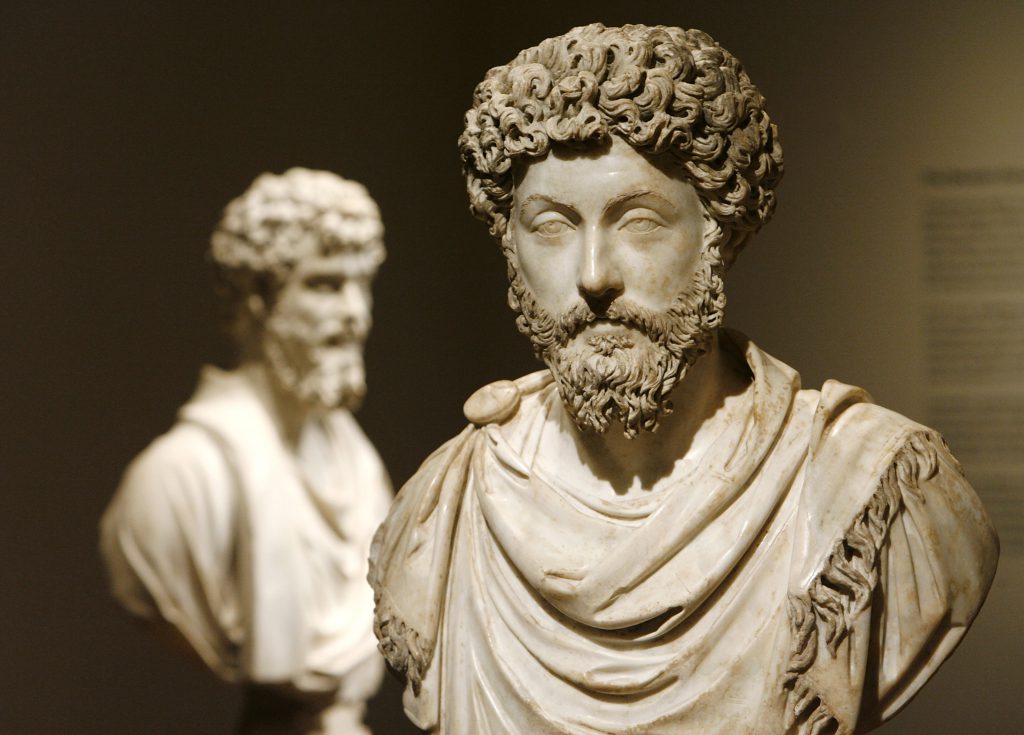
Has anyone heard of Stoicism?

marcus-1024x735

Two of the biggest influence on my approach to coaching – Process Focused Coaching, are Albert Ellis and Ken Ravizza. Both have passed on, and both were heavily influenced by the Stoic philosophy.

Ellis was described as a ‘Stoic Philosopher with a Sailor’s Mouth’. He was inspired by the writings of Stoic Philosophers to devise Rational Emotive Behavior Therapy (REBT). REBT was the first form of Cognitive Behavior Therapy and is still my preferred technique for athlete counseling.

According to Ellis, “people are not disturbed by things but rather by their view of things.” This is a dead ringer to the quote below by Epictetus (one of the three most important Stoic philosophers along with Marcus Aurelius and Seneca).

“It isn’t the events themselves that disturb people, but only their judgments about them.” – Epictetus

Continue reading “How to Coach like a Greek Philosopher”