Principles First Approach to Mental Resilience (Part 1 of 3)

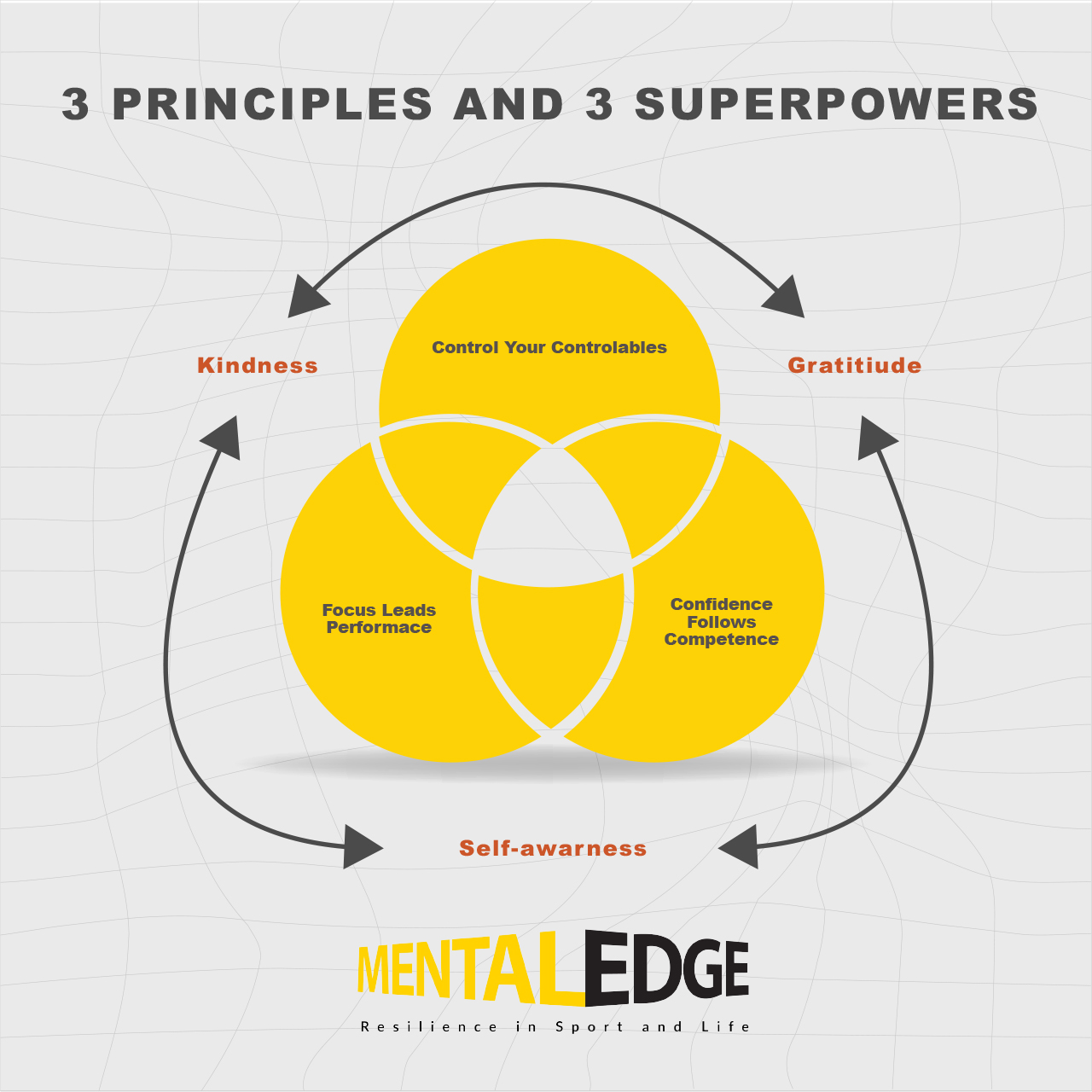
Traditionally, learners are introduced to psychological skills by learning the basics of goal setting, visualization, and self-talk (Weinberg & Gould, 2019). My preferred approach starts with the understanding of basic psychological principles, helping learners recognize their innate tendency for self-regulation, imagining future outcomes, and setting goals. By reflecting on past experiences where these tendencies helped them overcome challenges, learners gain insight into their existing strengths.

Consequently, the purpose of psychological skills training is to help them intentionally leverage these strengths to enhance performance and resilience. This approach requires a paradigm shift from viewing the learners as passive recipients of knowledge, waiting to be taught specific skills, to the assumption they already possess the innate resources needed to succeed (Rogers, 1995).
Continue reading “Principles First Approach to Mental Resilience (Part 1 of 3)”

“See it, believe it.”

Imagery, sometimes called visualization or mental rehearsal, is widely used by athletes, business professionals, musicians, and almost anyone looking to enhance their performance. It involves creating mental images of your performance to help you perform better under pressure, improve skills, evoke emotions, or create an immersive mental experience (Ramsey et al., 2010). I should also emphasize that Imagery is a mental skill; like all skills, it requires practice.

How does Imagery foster confidence and enhance performance?

Continue reading ““See it, believe it.””

What can this French Philosopher teach coaches about mental toughness? 

Michel Foucault

The late French Philosopher Michel Foucault (1926–1984) was well known for his explorations of power, control, and social discourse. He was particularly critical of how political institutions organize and control workers, students, soldiers, and prisoners to the extent that they surrender their power and become passive and docile bodies (Denison & Mills, 2014). Although this criticism emerged from the social-political sphere, they are also applicable to sports coaching, particularly when coaching becomes mainly about the power to control, monitor, and intervene to the extent that athletes become passive learners.

High Discipline + High Control = High Performance? 

Continue reading “What can this French Philosopher teach coaches about mental toughness? “