It’s perhaps the single most important factor in one’s overall success.
It’s also the first topic that I teach in all my psychological skills coaching programs.
Specifically, the Growth Mindset contributes to…
greater effort even in areas where he or she is lacking
the ability to bounce back from setbacks
increased confidence
It would be so much easier to coach an athlete with these qualities isn’t it?
So why aren’t we teaching our athletes about Mindset?
“Coaches have the misunderstanding that Mindset has to be taught at the expense of valuable practice time.” Coach Hansen
Unfortunately, a handful of coaches still feel that mindset or resilience is something that you either have or don’t, and that it cannot be taught.
However, most coaches do not teach mindset because they either do not know how to, or because they assume that teaching Mindset would be at the expense of valuable practice time.
This couldn’t be further from the truth. In fact, the teaching of mindset or any psychological skills should be put into context and integrated into the teaching of technical and tactical skills whenever possible. Instead of taking away valuable practice time, it helps the athlete to learn more effectively.
My intention for writing this two-part blog post is to share how we can integrate the teaching of Mindset into our coaching practices.
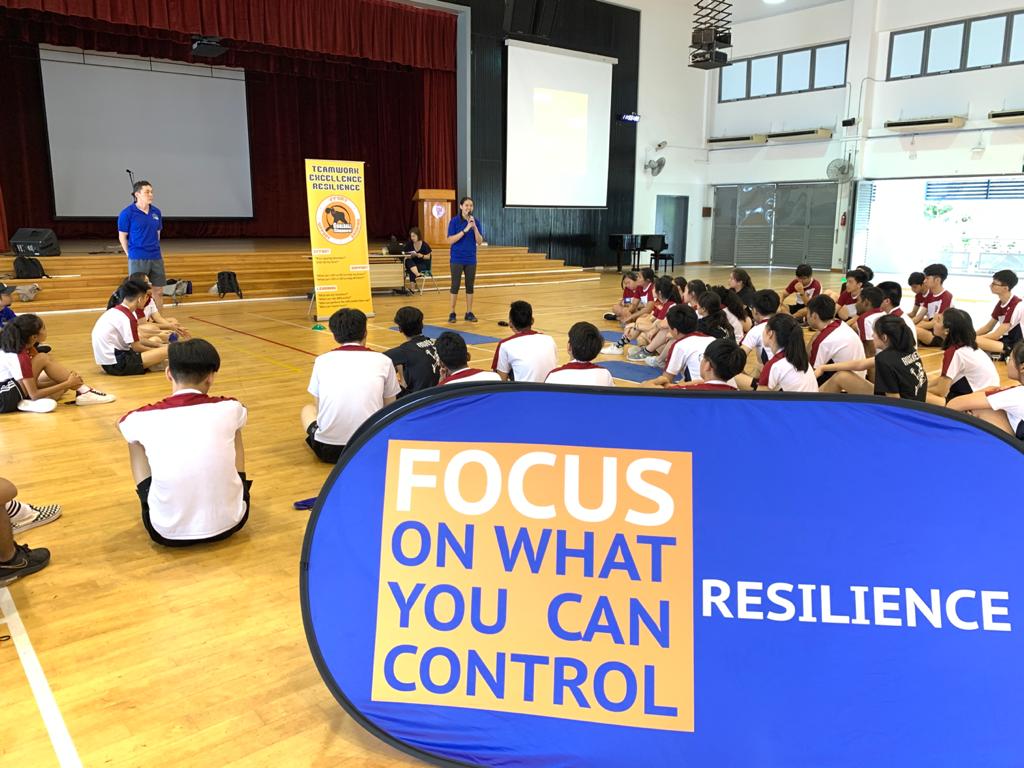
‘Control your Controllables’ (CYC) is a resilience program facilitated by the blind and experienced through the Paralympic game of Goalball. Earlier this week, my team conducted the program for a group of junior college students who did not manage to progress on to Year 2.
During the session, the students were asked to reflect on possible barriers that could stop them from putting in the necessary effort to pass their exams. Many of them alluded to some version of the same problem – the lack of motivation.
Does the problem really lie with the lack of motivation?
I asked the students if they were disappointed that they did not pass their exams, and why they wanted to progress on to Year 2. Indeed, these may seem like redundant questions but I was trying to get them to understand that they do not lack strong reasons nor motivation to strive for better results.
“The most pernicious aspect of procrastination is that it can become a habit. We don’t just put off our lives today; we put them off till our deathbed.” Steven Pressfield
The problem here isn’t about the lack of motivation. The problem lies with the ability to direct their motivation towards the goal of passing their exams. The problem has to do with procrastination, specifically, they were motivated to do something else rather than to study.
Like many of you, this is the time of the year where we would have a little more time to hang out with our friends and catch up on each other’s lives. This has by and large been enjoyable for me with the exception of a couple of instances with my friends who are coaches.
Why do coaches have so much to complain about?
This is not a loaded question to suggest that most coaches are whiners or that it is wrong to complain.
There are many aspects of the coaching landscape that could be improved, and it is fine to vent a little. However, some coaches rant non-stop about their circumstances and the number one source of unhappiness seems to be the lack of appreciation for their work from officials and athletes.
Control Your Controllables
Don’t get me wrong, I do feel the same at times BUT, I am adamant that we should not be such suckers for recognition especially since it’s not something that is within our direct control.
“The more we values things outside our control, the less control we have…” Epictetus
You can’t control the officials and coaches who choose to criticize and even make fun of you despite your best efforts.
You can’t control athletes who are ungrateful and self-entitled.
What happens when we keep focusing on what we cannot control?
Over time, it spirals down towards helplessness and even depression! We end up becoming chronic whiners desperate for validation. Not only is this bad for our mental health, it affects the mood of the people around us including the athletes that we coach. Coaching becomes a form of drudgery and as a human being, we become ineffective and unhappy.
Is it possible to NOT expect any form of recognition?
This may sound bleak, but it is as it is. One of our core emotional needs is to feel appreciated and it is almost impossible to be selfless and do good purely for the sake of others, i.e., pure altruism. You could have given up your cushy job to help the poor, are raising funds to build a sanctuary for stray animals, or even doing missionary work for some god or deity, it is still a means to your own satisfaction.
People act in these ways because doing so affirms who they are (self-concept) and the kind of world they want to exist, thus tying self-interest and altruism together.
Is it possible to be selfish, altruistic and happy all at once?
I believe it is possible, but it’s something that we have to be constantly mindful about rather than a constant state or something that we can master. I do have some suggestions that has helped me with this struggle, and it may work for you too…
1. Take care of yourself TOO
The common advice would be to take care of yourself FIRST, rather than TOO. I do not disagree, but I feel that it creates the perception that taking care of yourself or others has to be always ranked, or that they are dichotomies.
I’d rather ask myself how I could take care of myself and others at the same time. How can I align my business and self-interests with a purpose that extends beyond myself? And when push comes to shove and I need to choose between the two, I need not always prioritize my self-interest over altruism (which is in fact also tied in with self-interest).
Bottom-line, if you take care of yourself TOO, you are less likely to feel disgruntled or “victimized” and are more likely to be able to serve as an effective coach.
2. Letting go of Expectations
First, merely expecting something to happen will not make it happen (p.s. the “Law” of Attraction is BS). Yet many of us at some point have mistakenly believed that expecting other people to behave the way we want will actually make them behave that way!
Secondly, it is impossible to have no expectations, but we can learn how to let go of expectations and refocus on what matters and what’s within our control. Very often, this involves regaining control of our thoughts and recognizing that we can’t control what others think and do (or don’t do), but we can control how we respond to them.
“Between stimulus and response there is a space. In that space is our power to choose our response. In our response lies our growth and our freedom.” Viktor Frankl
In my opinion, this is by far the most important and difficult psychological skill to learn, and it is something that we can never really master. However, it is a worthwhile pursuit since it holds the key to our mental health and happiness.
Practicing gratitude and reminding ourselves about our coaching philosophy also helps us to let go of irrational thinking and expectations. This brings me to the last point…
3. Remind yourself of your WHY
“To live is to suffer, to survive is to find some meaning in the suffering.” Friedrich Nietzsche
For coaches, this refers to your coaching philosophy or why you coach. Our coaching philosophy most often centers around a goal that extends beyond our self-interest (again tying in self-interest with altruism), unless of course your coaching philosophy is simply about seeking respect and recognition from others.
Reminding ourselves about our WHY helps to put challenges and irrational thoughts into perspective.
Finally, if you are caught in a situation where not only is there a lack of appreciation for the value that you bring, and your health and income suffers as a result, my suggestion would be to do yourself a favor and quit.